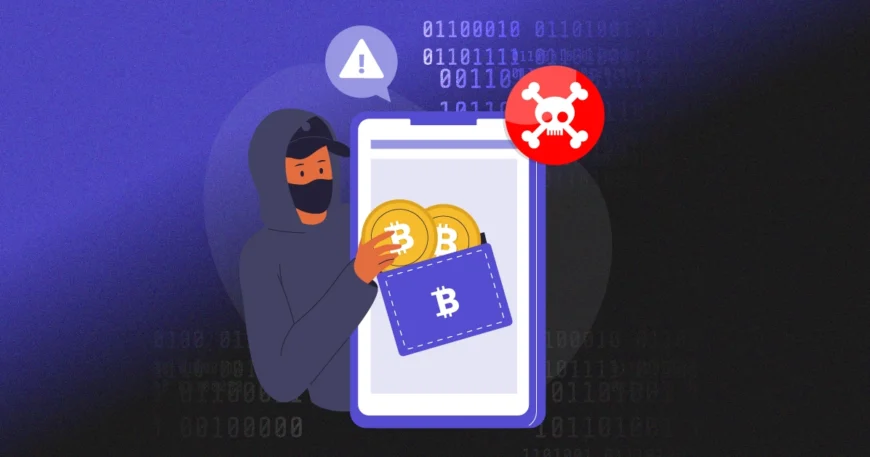
As cryptocurrency adoption continues to grow, so do the tactics used by cybercriminals to exploit users. One of the emerging threats in the blockchain ecosystem is address poisoning — a subtle yet highly deceptive attack designed to trick users into sending funds to fraudulent wallet addresses.
Unlike traditional hacking methods that rely on breaching systems, address poisoning manipulates user behavior. Because blockchain transactions are irreversible, even a small mistake can result in permanent financial loss. Understanding how this attack works and how to prevent it is important for individuals, investors, and crypto businesses.
What is address poisoning?
Address poisoning is a scam where attackers send a small amount of cryptocurrency from a wallet address that closely resembles a victim’s legitimate address. The goal is to “poison” the victim’s transaction history.
Many users copy wallet addresses from their recent transaction list instead of manually entering them. When a scammer creates a wallet that looks nearly identical — often matching the first and last few characters — it can trick users into accidentally copying the malicious address and sending funds to the attacker.
Since blockchain addresses are long strings of alphanumeric characters, most people only verify the beginning and end of the address. Attackers exploit this habit by generating lookalike addresses using automated tools.
How address poisoning works
The attack typically follows these steps:
Target identification – Attackers monitor blockchain activity and identify active wallet addresses.
Lookalike address creation – Using automated scripts, they generate wallet addresses that resemble the target’s address.
Dust transaction – A small amount of cryptocurrency (often insignificant in value) is sent to the victim from the fake address.
Transaction history manipulation – The malicious address appears in the victim’s transaction history.
User mistake – The victim copies the poisoned address from their history and unknowingly transfers funds to the attacker.
Because blockchain transactions are immutable, there is no way to reverse the transfer once funds are sent.
Why address poisoning is dangerous
Address poisoning is particularly dangerous for several reasons:
It does not require hacking or malware.
It exploits normal user behavior.
It bypasses many traditional security tools.
It is difficult to detect without careful verification.
Funds lost are typically unrecoverable.
As crypto adoption increases among retail investors and enterprises, these social-engineering-based blockchain attacks are becoming more common.
Who is at risk?
Address poisoning can affect:
Individual crypto holders
DeFi users
NFT traders
Crypto exchanges
Web3 startups
Businesses accepting crypto payments
Organizations managing high-value wallets or handling large transaction volumes face elevated risk. For enterprises operating in environments, professional blockchain security monitoring is essential.
How to prevent address poisoning
While address poisoning is deceptive, it can be prevented with strong security practices and awareness.
Never rely only on the first and last few characters. Carefully verify the entire wallet address before sending funds. Double-check each transaction, especially large transfers.
Organizations should deploy advanced blockchain analytics and monitoring tools to detect suspicious patterns, anomalous transactions, and potential fraud attempts.
This is where cybersecurity expertise becomes important.
The role of cybersecurity in preventing blockchain attacks
Address poisoning highlights a broader issue: blockchain environments require specialized cybersecurity strategies. Traditional IT security controls alone are not enough to mitigate crypto-related threats.
Businesses operating in blockchain and digital asset ecosystems must implement:
Blockchain transaction monitoring
Smart contract audits
Risk assessments
Incident response planning
Threat intelligence analysis
StrongBox IT provides advanced cybersecurity solutions tailored for evolving digital threats, including blockchain security challenges. By combining proactive monitoring, risk assessment, and structured security frameworks, StrongBox IT helps organizations strengthen digital asset protection and reduce exposure to crypto-based attacks.
For enterprises handling cryptocurrency transactions, partnering with experienced cybersecurity providers ensures both technical and procedural safeguards are in place.
Address poisoning vs. Other crypto attacks
Address poisoning differs from:
Phishing attacks, which trick users through fake websites or emails.
Malware attacks, which compromise devices to steal keys.
Smart contract exploits, which target coding vulnerabilities.
Instead, address poisoning relies primarily on user oversight and transaction behavior manipulation. Its simplicity makes it scalable and cost-effective for attackers.
What to do if you suspect address poisoning
If you suspect your address has been poisoned:
Do not interact with the suspicious address.
Avoid copying it for future transactions.
Move funds to a newly generated secure wallet if necessary.
Strengthen wallet verification procedures.
Consult cybersecurity professionals for risk evaluation.
Early detection can prevent larger financial losses.
Conclusion
Address poisoning is a growing blockchain threat that exploits user habits rather than system vulnerabilities. As crypto adoption increases, so does the need for stronger transaction verification practices and proactive cybersecurity measures.
Whether you are an individual investor or a business operating in the digital asset space, prevention starts with awareness and structured security controls. Partnering with experienced cybersecurity providers like StrongBox IT ensures your organization stays ahead of evolving blockchain threats while safeguarding valuable digital assets.
In the world of irreversible transactions, one small oversight can lead to permanent loss — making prevention your strongest defense.