

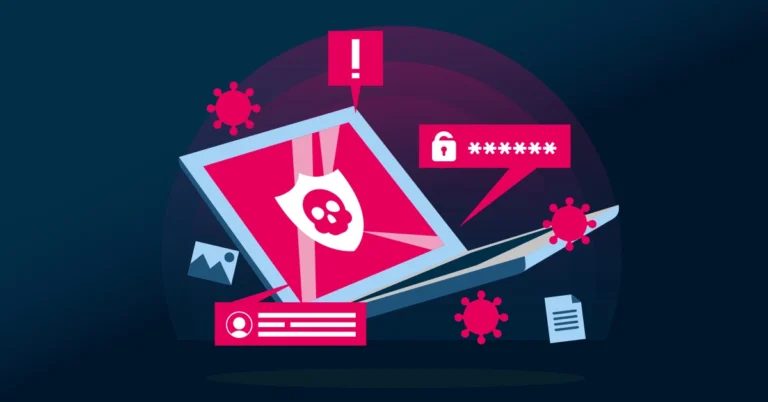
Infostealer malware is a type of malicious software designed to secretly steal sensitive information from a victim’s device without their knowledge. Once installed, it harvests passwords, cookies, financial data, crypto wallet details, documents, and other personal information, then sends that data back to cybercriminals who can profit from or exploit it.
Infostealers are a major cyber threat worldwide — easy to deploy, often sold under a malware-as-a-service (MaaS) model, and, as StrongBox IT strengthens visibility into these threats, used by both individuals and organised crime groups to breach privacy and support larger attacks.
How infostealers work
Infostealers typically enter a system through common attack vectors:
- Phishing emails: attaching malicious files or links.
- Infected downloads: bundled with pirated software, cracked apps, or fake utilities.
- Malicious websites or ads: tricking users into downloading what appears to be legitimate software.
Once executed, the malware collects sensitive data — including browser credentials, session cookies, stored passwords, crypto wallet files, and more — then transmits the stolen data to a remote server run by the attacker.
Because infostealers operate quietly in the background, victims usually remain unaware of the compromise until their data is misused or accounts are taken over. Continuous monitoring and early threat detection solutions—such as those provided by StrongBox IT—play a key role in identifying these hidden threats before significant damage occurs.
The AMOS infostealer: a real-world example
In 2025, macOS infostealers gained momentum as attackers increasingly targeted Apple devices used in personal and enterprise environments. One prominent example is Atomic macOS Stealer (AMOS), a malware-as-a-service tool designed to steal browser credentials, keychain data, and cryptocurrency wallet information. By exploiting user trust through deceptive downloads and social engineering, AMOS enables attackers to access sensitive data and resell stolen credentials, highlighting the growing risk infostealers pose to macOS users.
How AMOS spreads
Cybercriminals have recently combined classic infostealer strategies with innovative social engineering. An investigation revealed a campaign in which attackers:
- Purchase paid Google search ads to appear at the top of results for queries like “ChatGPT Atlas for macOS.”
- Direct users to shared ChatGPT conversations that appear to host installation guides. These chats are real but manipulated to look trustworthy.
- Convince users to copy and run a Terminal command on their Mac, which downloads and executes the AMOS malware.
This tactic is a variation of a social engineering scam called ClickFix, where users are tricked into manually executing seemingly normal commands that actually install malware.
What AMOS does once installed
Once active, AMOS:
- Steals login credentials, cookies, and browser data from Chrome, Firefox, and others.
- Harvests information from crypto wallets like Electrum, Exodus, and Coinomi.
- Searches for and exfiltrates personal files (TXT, PDF, DOCX) from key folders.
- Installs a backdoor that lets attackers regain access if the device reboots.
This combination of data theft and persistence makes AMOS a particularly dangerous example of infostealer malware in action.
Why infostealers are dangerous
Infostealer malware is especially harmful because the stolen data directly impacts privacy and financial security:
- Account takeovers: Stolen credentials can be used to hijack bank accounts, email, social media, and more.
- Financial loss: Credit card details and wallet information can be sold or drained.
- Identity theft: Personal documents and cookies can be used to impersonate a victim online.
In 2024–2025, millions of devices worldwide were impacted by infostealer malware, leading to extensive credential theft and significant financial losses in the cybercrime ecosystem.
Tips to protect yourself from infostealers
Defending against infostealer malware requires a layered approach, and at StrongBox IT, we combine safe online practices with dependable security tools to help reduce the risk of data theft. Strengthening account protection, keeping systems updated, and staying alert to digital threats play an important role in preventing data compromise.
- Use multi-factor authentication on important accounts to add an extra verification step if passwords are compromised.
- Store passwords in a secure password manager instead of browser autofill to reduce exposure.
- Keep operating systems, browsers, and applications updated to close known security gaps.
- Install reliable antivirus or endpoint protection software and run regular scans.
- Avoid clicking on unknown links, pop-ups, ads, or unexpected attachments.
- Download software only from official websites and trusted app stores.
- Log out after online sessions and clear browser cookies to limit session hijacking risks.
- Regularly monitor bank accounts and online services for unusual activity and respond quickly to any signs of compromise.
Conclusion
In conclusion, infostealer malware — such as the AMOS infostealer, represents a sophisticated and evolving threat that can quietly harvest your most sensitive data. By understanding how these attacks work and taking proactive security measures, individuals and organisations can reduce the risk of falling victim to these stealthy cyber threats.
With proactive monitoring and advanced endpoint protection, StrongBox IT helps organisations detect stealthy malware, secure sensitive data, and respond to cyber risks before they cause serious damage.

