Latest Posts

What Is the Difference Between IoT and OT Security
November 6, 2026
Connected devices and industrial systems help organisations collect data, automate tasks, and manage daily operations, from smart cameras and connected sensors to manufacturing equipment and power grid controllers. However, increased connectivity also creates security risks. Internet of Things (IoT) security and Operational Technology (OT) security are two important areas of cybersecurity that protect these technologies but differ in their objectives, the systems they secure, and the potential consequences of an attack. Understanding these differences helps organisations choose suitable security measures to protect devices, networks, industrial processes, and sensitive information.
What Is IoT Security?
IoT security protects connected devices, their communications, and the data they collect from cyber threats. Common security measures include:
- Device Authentication: Restricting access to authorised users and systems.
- Data Encryption: Protecting information exchanged between devices.
- Firmware Updates: Fixing vulnerabilities and improving device security.
What Is OT Security?
OT security protects the hardware and software used to monitor and control industrial equipment and physical processes. Common security measures include:
- Network Segmentation: Separating industrial systems from other networks.
- Access Control: Restricting who can access equipment and modify settings.
- Vulnerability Management: Identifying and addressing security risks while maintaining operational safety.
What Is the Difference Between IoT and OT?
IoT and OT security share several practices, including network protection, monitoring, and vulnerability management. However, their priorities differ according to the purpose of the technologies they protect.
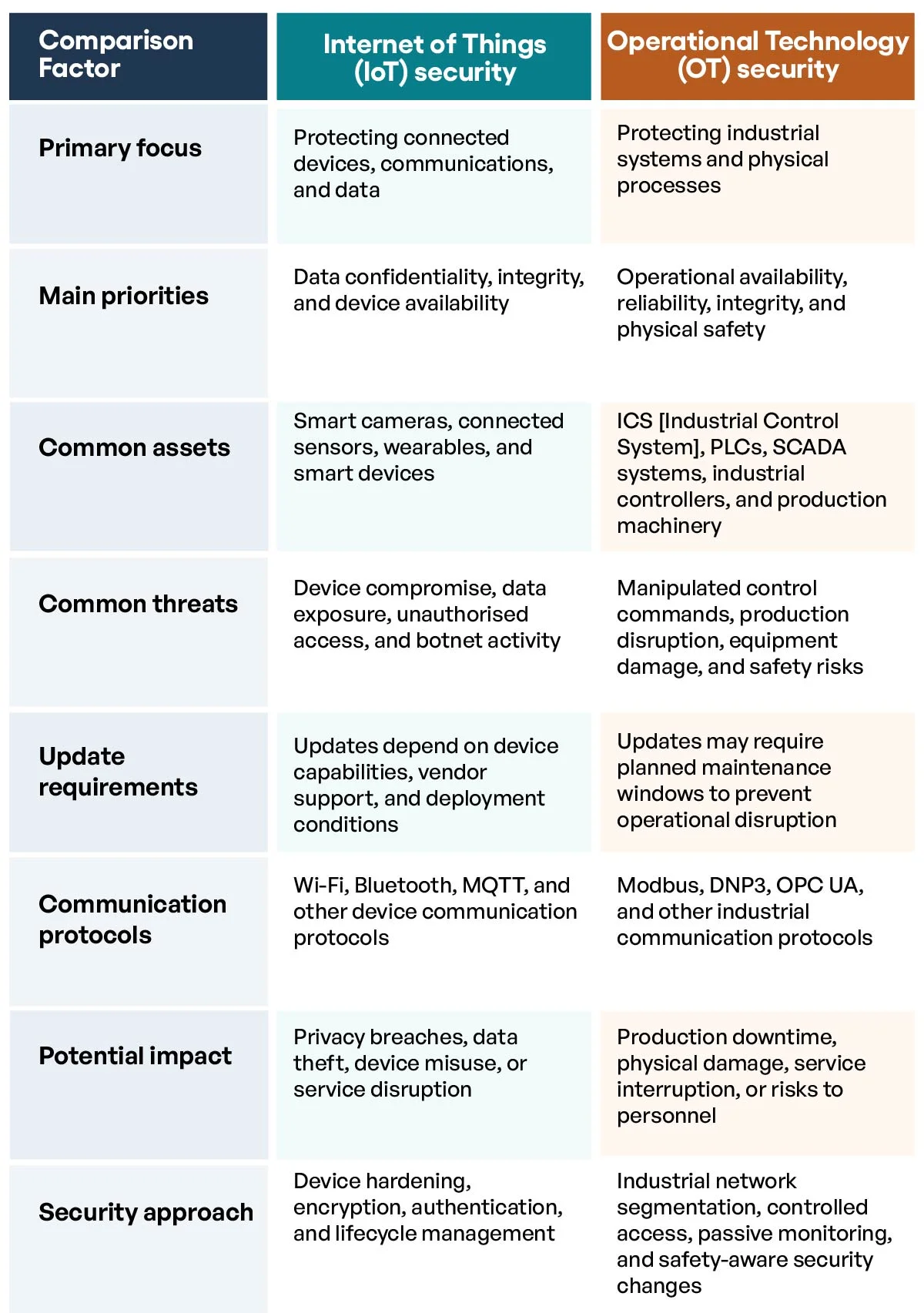
These distinctions are general rather than absolute. Some IoT devices support physical processes, while OT systems may also handle sensitive data. Organisations should therefore assess the purpose, connectivity, and potential impact of each system before selecting security controls.
Another important difference is how security changes are implemented. IoT devices may need regular firmware updates and stronger device configurations, whereas OT systems may require carefully planned security changes to avoid affecting industrial processes.
As IoT and OT environments become more connected, organisations must also consider how a compromised device could affect other systems. A weakness in an IoT device connected to an industrial network, for example, could create an entry point for attackers if appropriate network restrictions are not in place.
How Can Organisations Secure IoT and OT Systems?
Although IoT and OT environments require different security priorities, organisations can adopt a coordinated approach to reduce risks across both. The right measures depend on the devices involved, the sensitivity of the data, and the potential consequences of a security incident.
 Maintain an Accurate Asset Inventory
Organisations should identify connected devices, industrial controllers, software, network interfaces, and external connections. Maintaining an updated inventory helps security teams understand their exposure, identify unsupported devices, and prioritise protection.
-
Apply Network Segmentation
Separate IoT devices, corporate IT systems, and OT networks according to their functions and risk levels. Restrict communication to approved connections and prevent devices from accessing systems they do not need. Strong segmentation can also limit the spread of an attack.
-
Strengthen Authentication and Access Controls
Replace default credentials, enforce strong authentication, and assign permissions according to users' responsibilities. Remote access should be restricted to authorised personnel, monitored regularly, and removed when no longer required.
-
Manage Vulnerabilities and Updates
Regularly assess devices and systems for known vulnerabilities and insecure configurations. Apply vendor-supported updates where possible. For OT environments, evaluate the operational impact of patching before making changes. If immediate updates are not feasible, consider additional controls, such as network isolation and restricted access.
-
Monitor Networks and Device Activity
Monitor network traffic, access events, and device behaviour to identify suspicious activity. IoT monitoring can help detect unusual communications or compromised devices, while OT monitoring should account for normal industrial traffic and avoid disrupting sensitive processes.
-
Conduct Security Testing
Security testing helps identify weaknesses across connected devices, applications, networks, and industrial environments. VAPT and network security testing assess security controls, while continuous security monitoring helps detect emerging threats.At StrongBox IT, we tailor security testing and monitoring to each environment, considering operational requirements and potential risks, particularly in OT systems where active testing may disrupt production.
-
Prepare an Incident Response Plan
Organisations should establish procedures for investigating compromised devices, isolating affected systems, restoring services, and communicating with relevant teams. OT incident response plans should involve operational personnel because containment decisions can affect production, equipment, and safety.Regularly reviewing these procedures helps organisations respond more consistently when security incidents occur.
Conclusion
IoT security protects connected devices and their data, while OT security safeguards industrial systems and physical operations. As these environments become more connected, organisations need appropriate security controls, vulnerability assessments, network segmentation, and continuous monitoring to reduce risks and maintain reliable operations.
Strengthen your organisation’s security with StrongBox IT. Contact our team to explore how our cybersecurity services can help identify vulnerabilities and strengthen your security posture.